

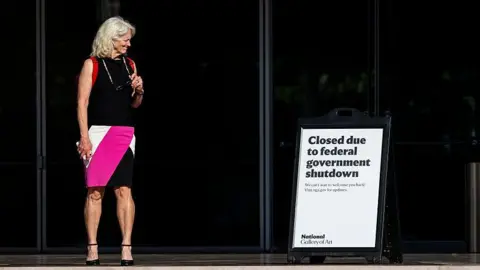
Government closures have become a recurring feature of US politics – however this one feels particularly intractable due to shifting political forces along with bad blood between both major parties.
Certain federal operations face a temporary halt, with approximately 750,000 people are expected to be put on furlough without pay since both political parties can't agree on a spending bill.
Legislative attempts to resolve the deadlock have repeatedly failed, and it is hard to see an off-ramp in this instance because both parties – as well as the President – perceive advantages in maintaining their positions.
These are several key factors that make things feel different in 2025.
1. For Democrats, the focus is on Trump – not just healthcare
Democratic supporters has been demanding for months that their party adopt stronger opposition against the current presidency. Currently Democratic leaders has a chance to demonstrate they have listened.
Earlier this year, Senate leader was fiercely criticised for helping pass GOP budget legislation and averting a government closure early this year. This time he's holding firm.
This presents an opportunity for Democrats to demonstrate their ability to reclaim certain authority from a presidency that has moved aggressively with determined action.
Opposing the Republican spending plan comes with political risk that the wider public may become impatient as the dispute drags on and impacts accumulate.
The Democrats are leveraging the shutdown fight to highlight concerns about expiring health insurance subsidies together with GOP-backed federal health program reductions affecting low-income populations, both facing public opposition.
Additionally, they're attempting to curtail the President's use of his executive powers to cancel or delay funding authorized legislatively, a practice demonstrated with foreign aid and various federal programs.
Second, For Republicans, they see potential
The administration leader and one of his key officials have made little secret their perspective that they perceive an opening to make more of the cutbacks to the federal workforce implemented during the current presidential term so far.
The nation's leader personally said last week that the government closure provided him with a "unique chance", adding he intended to cut "Democrat agencies".
Administration officials said it would be left with a "challenging responsibility" of mass lay-offs to maintain critical federal operations if the shutdown continued. The Press Secretary said this was just "fiscal sanity".
The extent of possible job cuts is still uncertain, though administration officials has been in discussions with federal budget authorities, the budgeting office, which is headed by the key official.
The administration's financial chief has already announced the suspension of federal funding for regions governed by the opposition party, such as NYC and Chicago.
3. There's little trust on either side
While previous shutdowns typically involved late-night talks among political opponents in an effort to get federal operations, there appears to be little of the same spirit of collaboration this time.
Conversely, animosity prevails. Political tensions continued over the weekend, as both sides blaming each other regarding the deadlock's origin.
House Speaker from the majority party, charged opposition members of not being serious toward resolution, and holding out over a deal "to get political cover".
Meanwhile, the Senate leader levelled the same accusation at the other side, stating how a Republican promise regarding health funding talks once the government reopens cannot be trusted.
The administration leader personally has inflamed the situation by posting a computer-created controversial depiction of the Senate leader and the top Democrat in the House, in which the representative is depicted with traditional headwear and a moustache.
The affected legislator and other Democrats called this racist, a characterization rejected by the administration's second-in-command.
Fourth, The American Economy is fragile
Analysts expect approximately two-fifths of government employees – over 800,000 workers – to be put on unpaid leave due to the shutdown.
That will depress spending – and also have wider ramifications, including halted environmental approvals, delayed intellectual property processing, interrupted vendor payments and other kinds of government activity connected to commercial interests comes to a halt.
The closure additionally introduces fresh instability into an economy already being roiled from multiple factors including tariffs, earlier cuts to government spending, enforcement actions and technological advancements.
Analysts estimate that it could shave as much as 0.2 percentage points from national economic expansion weekly during the closure.
But the economy typically recoups most of that lost activity following resolution, as it would after disruption caused by a natural disaster.
This might explain partially why financial markets has appeared largely unfazed to the ongoing impasse.
Conversely, analysts say that if the President carries out his threat of mass firings, economic harm might become extended in duration.


